
Can Canadian Charitable Purposes Be Amended After Registration?

Published on
January 2, 2025
Last updated on
February 22, 2026
When setting up a charity or nonprofit in Canada, one of the key components is defining the charitable purposes it intends to serve. These purposes are crucial, as they help guide the organization's mission, activities, and eligibility for tax-exempt status. But what happens if a charity or nonprofit needs to amend its charitable purposes after registration? Can it be done? Let's dive into the details.
⚠️ Important CRA Update — January 2026
In its Sixth Edition Quarterly Update (released January 15, 2026), the Canada Revenue Agency announced a significant change to how it handles charitable purpose amendments: the CRA will no longer provide pre-approval or advance review of proposed purpose changes.
This directly affects the amendment process described in this article. Additional guidance from the CRA is expected in the coming months. We strongly recommend consulting a charity lawyer before proceeding with any amendments under the new framework.
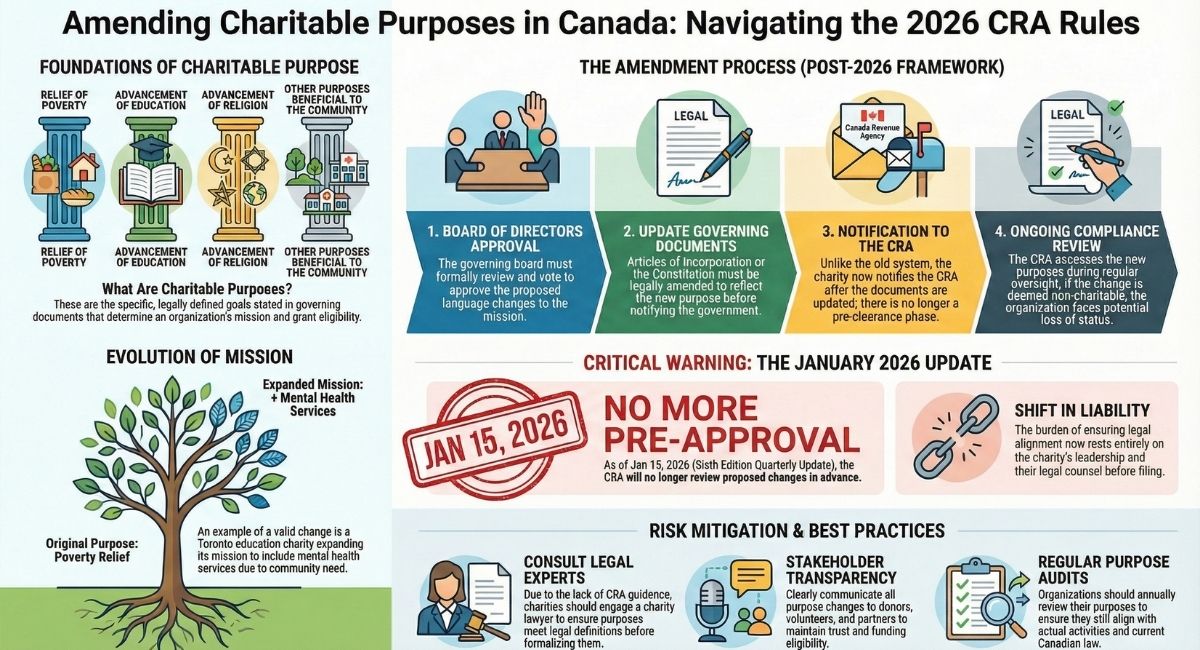
What Are Charitable Purposes?
In Canada, charitable purposes are the specific goals or missions that a charity is established to pursue. These purposes must fall within the legal definitions set out by Canadian charity law and typically include objectives like:
- The relief of poverty
- The advancement of education
- The advancement of religion
- Other purposes beneficial to the community
When you register a charity, you must clearly state your charitable purposes in your governing documents. These purposes will determine your charity's activities and the funding or grants you can apply for. For example, a charity focused on providing food assistance would have a charitable purpose related to poverty relief.
Why Might You Need to Amend Charitable Purposes?
There are several reasons why a charity might need to change its charitable purposes:
- Change in Focus: Over time, a charity may find that its mission needs to evolve or shift in response to community needs or emerging issues.
- Expansion of Services: A charity that originally focused on one area, such as education, might want to broaden its scope to include other related areas like healthcare.
- Legal or Tax Requirements: Changes in Canadian charity laws or regulations may require a charity to amend its purposes to stay compliant.
For example, a charity in Toronto that was originally set up to provide educational programmes might decide to include mental health services as part of its mission after recognizing the growing need for such services in the community.
Can Charitable Purposes Be Amended?
Yes, charitable purposes can be amended, but the process is not automatic and involves several steps. The process can vary depending on whether your organization is a registered charity or a nonprofit, as well as the province or territory where you are located.
For Charities in Canada:
For a charity registered with the Canada Revenue Agency (CRA), any amendment to the charitable purposes must be approved by the CRA. This process ensures that the new purposes still meet the legal requirements for charity status. The following steps are typically involved:
1. Approval from the Board of Directors: Before submitting a request to the CRA, your charity's board of directors must approve the proposed changes for charitable purposes.
2. Amendment of Governing Documents: The charity must update its governing documents, such as the articles of incorporation or the constitution, to reflect the new purposes. These documents must clearly outline how the new purposes align with the charity's mission.
3. Submission to the CRA: Once your governing documents are updated and your board has approved the changes, you will need to notify the CRA of the amendment. As of January 2026, the CRA no longer provides pre-approval or advance review of purpose changes. Charities are advised to consult a charity lawyer to understand the current submission and notification requirements, as further CRA guidance on this new process is expected.
4. CRA Compliance Review: The CRA will assess whether the amended purposes comply with Canadian charity law as part of its ongoing oversight — rather than as a pre-approval step. If your amended purposes do not meet the legal requirements for charitable status, your charity may face compliance issues. This makes it even more important to ensure that any amendments are legally sound before they are made.
5. Notification and Updates: Once approved, the charity must update its public records and notify relevant stakeholders, such as donors and partners, of the change in purpose.
For Nonprofits:
For nonprofits, the process of amending purposes is generally similar, but it may differ based on provincial or territorial regulations. For example, in Ontario, under the Ontario Not-for-Profit Corporations Act (ONCA), nonprofits can amend their purposes by following the procedures outlined in their bylaws, which typically require a vote by the membership or board of directors.
If the nonprofit is registered as a corporation, it will need to file the amendment with the relevant provincial or federal authorities. Additionally, nonprofits must ensure that their new purposes are still in line with their original objectives of being a nonprofit to maintain their status and benefits.
What Happens if the Amendment is Denied?
If the CRA or relevant provincial authority denies the amendment, the charity or nonprofit must continue operating under its original purposes. However, it is possible to appeal a decision if there is a compelling reason why the amendment should be allowed.
For example, if a charity's application to expand its purposes is denied because the CRA deems the new purposes do not align with charitable objectives, the charity may need to reconsider its approach or provide more information demonstrating how the new purposes benefit the community.
Legal Considerations When Amending Charitable Purposes
When considering amendments to charitable purposes, it's essential to keep in mind the following:
- Consistency with Charitable Status: The new purposes must still fall within the categories defined by Canadian charity law. This means that the changes cannot be for commercial or personal gain.
- Transparency and Accountability: Charities and nonprofits must remain transparent about their purposes and how funds are being used. If purposes change, they should clearly communicate these changes to the public and donors.
- Impact on Fundraising and Tax Status: Changing a charity's purposes can affect its eligibility for certain grants, tax credits, or fundraising activities. If the purposes change significantly, the charity may need to reapply for funding or re-qualify for tax-exempt status.
How to Avoid Issues When Amending Charitable Purposes
To avoid complications when amending charitable purposes, it's important to take a proactive approach:
- Regularly Review Purposes: Charities and nonprofits should regularly review their purposes to ensure they remain relevant and in line with the organization's mission.
- Consult Legal Experts: If considering a change to your charitable purposes, consult with a charity lawyer to ensure that the amendment complies with the applicable laws and regulations.
- Engage Stakeholders: Keep your stakeholders informed about potential changes. This includes board members, donors, and volunteers who may have a vested interest in the charity's mission and goals.
- Stay Current on CRA Policy: The CRA's process for handling purpose amendments is evolving. Following the January 2026 announcement that advance reviews will no longer be offered, charities should stay informed about any new CRA guidance as it is released and ensure their approach to amendments reflects the most current requirements.
Amending charitable purposes after registration is a possible and sometimes necessary step for charities and nonprofits in Canada. However, it requires careful planning, approval from the governing body, and adherence to legal requirements.
Whether expanding the scope of a charity's mission in Toronto or Vancouver or shifting focus to address emerging issues in Calgary, it's important to ensure that the new purposes align with the legal definitions and remain transparent to the public. If your charity is considering amending its purposes, consult with charity lawyers to ensure a smooth process and avoid any disruptions to your operations.
Recent CRA Changes to the Amendment Process (January 2026 Update)
In January 2026, the CRA made a notable change to how it handles requests from registered charities to amend their charitable purposes. Through its Sixth Edition Quarterly Update (released January 15, 2026), the CRA confirmed that it will no longer offer pre-approval or advance review of proposed purpose changes.
This is a significant shift from the previous process, where charities could seek CRA feedback on proposed amendments before formally updating their governing documents. Under the new approach, charities must ensure that their amended purposes meet the legal requirements for charitable status without the benefit of advance CRA guidance.
The full implications of this change are still unfolding. The CRA has indicated that additional guidance will be provided in the coming weeks and months. In the meantime, charities considering purpose amendments should:
- Seek legal advice from a qualified charity lawyer before making any changes
- Ensure that amended purposes clearly fall within the accepted categories of charitable purposes under Canadian law
- Document the board approval process thoroughly
- Monitor the CRA website and official communications for any new guidance on the updated process
We will update this article as further information becomes available from the CRA.
The material provided on this website is for information purposes only.. You should not act or abstain from acting based upon such information without first consulting a Charity Lawyer. We do not warrant the accuracy or completeness of any information on this site. E-mail contact with anyone at B.I.G. Charity Law Group Professional Corporation is not intended to create, and receipt will not constitute, a solicitor-client relationship. Solicitor client relationship will only be created after we have reviewed your case or particulars, decided to accept your case and entered into a written retainer agreement or retainer letter with you.
DOV GOLDBERG, J.D. is a lawyer at B.I.G. Charity Law Group and has dedicated his career exclusively to Charity and Not-for-Profit Law for over a decade. Dov guides charities, foundations, and non-profit organizations through every stage of the registration process, offering practical legal advice with a focus on compliance, governance, and long-term success. Known for his hands-on approach and deep knowledge of CRA requirements, Dov is committed to helping clients build strong, sustainable, and legally sound organizations.
.png)


